
01🔎
Verify the source
Read the full URL and check the installation source. Lookalike sites and ads can mislead.
Read the guide ↗Learn the habits behind user-controlled credentials, readable asset views, and deliberate transaction reviews—all in one place.
Back up before you transact. Know what you sign.
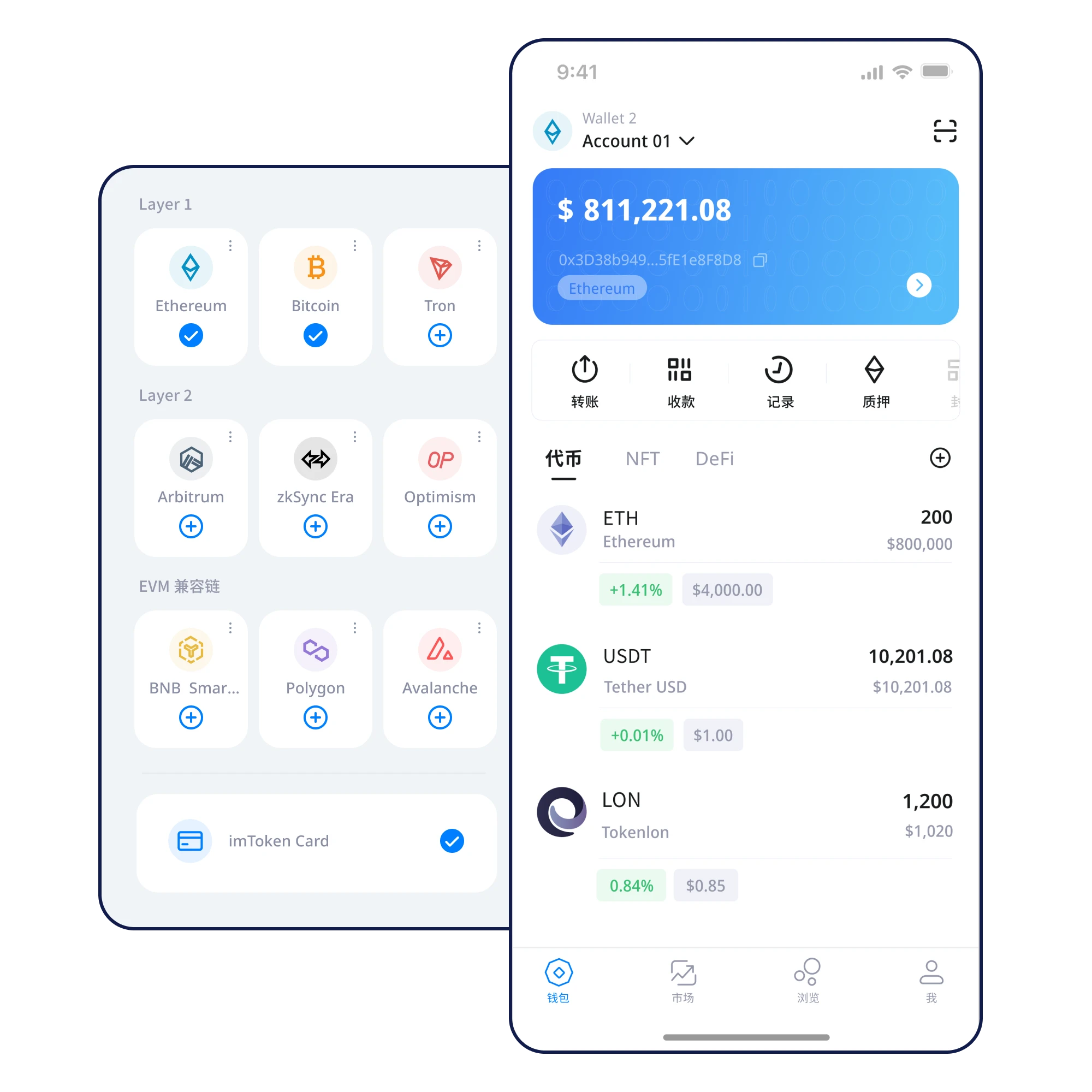
A simplified wallet preview puts assets, networks, and backup reminders in context. All values here are illustrative, not linked to any account.
 Understand and organize your assets
 A practical route from checking the source to reviewing your first transfer.
Read the full URL and check the installation source. Lookalike sites and ads can mislead.
Read the guide ↗Check device security and understand the difference between creating and importing.
Read the guide ↗Write every recovery word privately, in order. Never send it to another person.
Read the guide ↗Store your backup securely and make sure you understand the trusted recovery process.
Read the guide ↗Check the chain and token contract, and distinguish balances from their on-chain records.
Read the guide ↗Inspect the address, network, value, and permissions; consider a small test transfer.
Read the guide ↗
Understand which secrets protect signing authority and how to handle them without exposing them online.
How local key management works
An offline record and a clear restoration process matter more than a reassuring badge.
Recover a wallet with your backup
Check the destination, network, and approval scope rather than approving a request on impulse.
Review every transfer before signingBuild ownership, verification, and recovery into every decision.
Keep your recovery credentials under your control.
Read each network, address, and signing request.
Prepare a verified offline backup before it is needed.
Browse focused guidance for the task in front of you.
Prepare a trusted device, review each wallet creation step, secure your recovery phrase, and complete the essential checks before receiving or transferring assets.
Create your first walletLearn how tokens appear across networks, how to verify contract details, and why an interface preview or displayed balance should not be treated as live account data.
Understand and organize your assetsReview the destination network, receiving address, token, amount, and transaction fee before signing, with guidance on test transfers and irreversible operations.
Review every transfer before signingPrepare a verified recovery backup before switching devices, check the restored wallet carefully, and decide how to handle sensitive information on an older device.
Move your wallet to a new deviceSpot impersonation sites, suspicious messages, misleading approvals, and unexpected transaction prompts before connecting a wallet or signing an operation.
Recognize phishing and fake approvalsLookalike sites, exposed recovery phrases, and wrong-network transfers deserve careful attention. When unsure, stop and verify independently.
Recognize phishing and fake approvalsSelf-custody means users manage the credentials that control their accounts. Exact behavior depends on the wallet and its configuration; always check how keys are handled.
Network access is generally needed for blockchain updates and broadcasting transactions. A recovery phrase can and should be backed up offline.
Write it down accurately and store it offline in a location you control. Never photograph it, save it to cloud storage, or disclose it to someone offering support.
A private key signs for a particular account, while a recovery phrase may restore a set of related accounts. Both require careful protection.
Verify the source, protect your backup, and take control of your wallet setup.
⬇ Download NowNever disclose your recovery phrase or private key.